
Keeping California, MD Businesses Running Smoothly with Reliable Commercial Maintenance
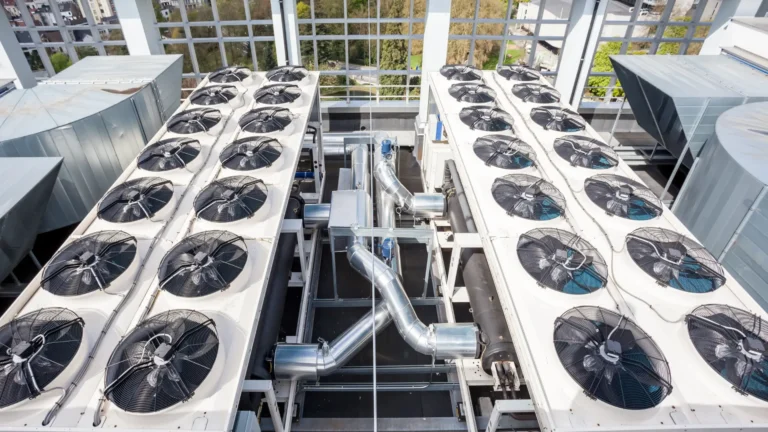
A rooftop unit left unchecked through a humid Maryland summer can lose a measurable share of its cooling capacity before anyone notices a problem on the thermostat. By the time a tenant complains about a warm storefront, the compressor may already be working harder than it should, drawing more electricity and inching toward a repair that could have been avoided. This is the quiet reality behind commercial maintenance: small issues compound, and the cost of ignoring them almost always exceeds the cost of a planned service visit.
At T. N. Bowes Heating & Air Conditioning, Inc., we have built our commercial maintenance work in California, MD around preventing that slow decline. A family-owned air conditioning company serving Leonardtown, MD, and the surrounding area, we have spent decades learning how commercial buildings behave across the seasons. Since 1988, customers have chosen us over other HVAC contractors in southern Maryland because we treat maintenance as the foundation of reliable climate control, not an afterthought.
What Commercial Maintenance Actually Covers
Many business owners assume maintenance means a quick filter swap and a glance at the equipment. In practice, a thorough commercial maintenance program reaches into every subsystem that affects comfort, air quality, and energy use. We inspect electrical connections, measure refrigerant charge, test safety controls, clean condenser and evaporator coils, check belts and motors, and verify that thermostats and control sequences respond correctly. Each of these steps targets a specific failure mode that we see repeatedly in commercial equipment across California, MD.
Maintenance also includes documentation. We record readings over time so that a gradual drop in performance becomes visible before it turns into a breakdown. A compressor drawing slightly more amperage each visit, for example, tells us something that a single snapshot never could. This record-keeping lets us recommend repairs with confidence rather than guesswork, and it gives you a clear history of your equipment’s condition when budgeting for future upgrades.
Common Concerns We Hear From Building Owners
Before committing to a maintenance agreement, most business owners want straightforward answers to a handful of questions. We find it helps to address these directly, because the value of maintenance is easier to see once the reasoning is clear.
- How often should commercial equipment be serviced: Most commercial systems benefit from at least two visits per year – one before the cooling season and one before the heating season – though heavy-use buildings often need more frequent attention.
- Does maintenance really lower operating costs: Clean coils, correct refrigerant levels, and properly tuned controls reduce the energy a system needs to hit the same temperature, which shows up on monthly utility bills.
- Will servicing extend equipment life: Equipment that runs within its design parameters experiences less mechanical stress, and that directly translates to more years of service before replacement becomes necessary.
- What happens if we skip a season: A missed visit lets small problems accumulate, and the most common result is a failure during the exact period of heaviest demand.
These questions matter because a commercial system rarely fails all at once. It degrades quietly, and the warning signs are easy to miss without a trained eye checking the details on a regular schedule.
Our Approach to Scheduled Service
We structure our maintenance visits around the way your building actually operates. A restaurant kitchen places very different demands on an HVAC system than a professional office, and a retail space with constant door traffic behaves differently from a warehouse. During our first visit, we learn how your space is used, where the comfort complaints tend to originate, and which pieces of equipment carry the heaviest load. That understanding shapes every visit that follows.
Our technicians are highly trained, and we put that training to work by treating each system as part of a larger whole rather than a collection of isolated parts. When we tune an air handler, we also consider how it interacts with the ductwork, the controls, and the outdoor unit. This whole-system perspective is one of the reasons our maintenance work tends to catch problems that a checklist-only approach would overlook. We built our outstanding reputation by delivering excellent service at a competitive price, and careful, methodical maintenance is central to that reputation.
Technical Factors We Monitor Closely
Commercial equipment operates within tight tolerances, and small deviations have outsized effects. Refrigerant charge is a clear example. A system undercharged by even a modest amount loses cooling capacity and runs longer cycles, which raises both energy use and wear on the compressor. We measure superheat and subcooling to confirm the charge is correct, rather than relying on pressure readings alone, because pressures can look acceptable even when the system is not operating efficiently.
Airflow is another factor we track carefully. Restricted airflow from dirty filters, blocked returns, or failing blower motors forces the system to work against itself. On the heating side, we verify combustion performance and inspect heat exchangers for any signs of cracking, which affects both safety and efficiency. Electrical components receive equal attention – loose connections generate heat, and heat degrades terminals and wiring over time, so tightening and testing these points is a small step that prevents larger failures.
Where Maintenance Makes the Biggest Difference
The buildings that gain the most from a maintenance program tend to share certain characteristics. Consider a few situations we encounter frequently throughout California, MD and the communities we serve.
- High-occupancy spaces: Offices, medical suites, and retail stores where comfort directly affects customers and staff cannot tolerate extended downtime, so preventive care protects both the environment and the bottom line.
- Temperature-sensitive operations: Spaces that store inventory, equipment, or products sensitive to heat and humidity depend on consistent performance, and a single failure can create losses far beyond the repair cost.
- Aging equipment nearing replacement: Older systems still have useful life left in them, and disciplined maintenance helps owners get the most from that remaining life while planning a replacement on their own timeline.
In each of these cases, the goal is the same: keep the system running the way it was designed to run, and catch the small issues before they grow. A planned maintenance visit costs a fraction of an unplanned failure, and it spares you the disruption that comes with losing climate control during business hours.
Why Businesses Across Southern Maryland Choose Us
We install quality products and stand behind the work we do, and that commitment carries into our maintenance agreements. When we service your equipment, we are protecting an investment you have already made, and we take that responsibility seriously. Our longevity in this region – serving California, MD along with Lexington Park, Hollywood, Leonardtown, Saint Charles, Mechanicsville, La Plata, California, Waldorf, Lusby, Hughesville, White Plains, Bennsville, Brandywine, and Prince Frederick, MD – reflects a simple approach: do thorough work, explain it clearly, and treat each building as if its comfort were our own responsibility.
If you are weighing whether a maintenance program makes sense for your building, the answer usually comes down to how much you rely on consistent climate control and how costly an unexpected failure would be. For most commercial spaces, the math favors prevention. T. N. Bowes Heating & Air Conditioning, Inc. is ready to help you build a maintenance plan suited to your equipment, your schedule, and the way your business actually operates. Reach out to us to discuss how regular, professional service can keep your system dependable season after season.