Commercial Maintenance in Mechanicsville, MD
A rooftop unit that runs unchecked through a full season of operation can lose a measurable amount of efficiency long before it fails outright. Belts stretch, coils collect dirt, refrigerant charges drift out of specification, and electrical connections loosen under the constant vibration of daily cycling. For a business in Mechanicsville, MD, these gradual changes translate into higher energy bills, uneven temperatures across the floor, and equipment that wears out years ahead of schedule. Commercial maintenance exists to catch these problems while they are still small and inexpensive to correct.
At T. N. Bowes Heating & Air Conditioning, Inc., we treat commercial maintenance as a structured discipline rather than a quick once-over. Every visit follows a defined sequence, from verifying operating pressures to inspecting the condition of contactors and capacitors. As a family-owned air conditioning company serving Leonardtown, MD, and the surrounding area, we have spent decades learning how commercial systems behave in this part of southern Maryland, and we apply that experience to keep your equipment running the way it did on the day it was installed.
What Sets Commercial Systems Apart
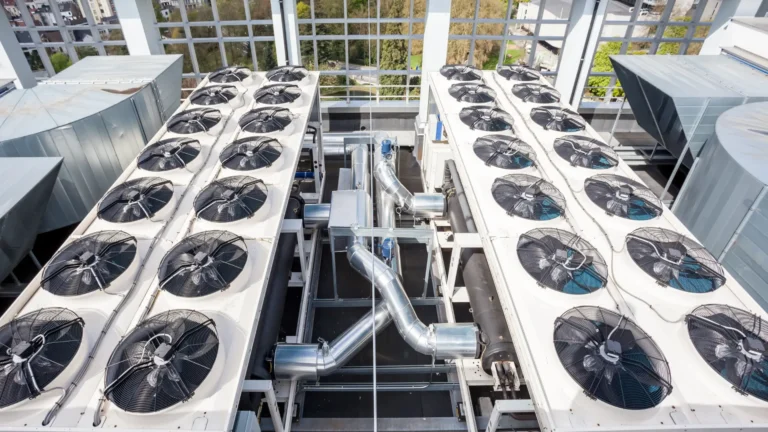
Commercial HVAC equipment differs from residential gear in ways that directly shape how it must be maintained. Rooftop package units, split systems with long refrigerant line sets, multi-zone controls, and large air handlers all operate under heavier loads and longer runtimes than anything found in a typical home. A restaurant kitchen exhaust system, for example, moves a large volume of air and needs makeup air balanced against it, while a medical office demands tight temperature and humidity control for patient comfort and equipment protection.
Because these systems run so many hours each day, small inefficiencies compound quickly. A condenser coil coated with cottonwood seed and dust forces the compressor to work harder, raising head pressure and shortening the life of the most expensive component in the system. A blower motor drawing slightly high amperage may run for months before it burns out, but a technician who checks amperage draw against the nameplate rating can flag it early. Maintenance for commercial buildings is about tracking these measurable indicators over time and acting before they turn into a shutdown.
Our Maintenance Process Explained
When our technicians arrive for a scheduled maintenance visit, they work through a consistent checklist so that nothing gets skipped. The goal is a complete picture of system health, documented so that trends become visible from one visit to the next. A single reading tells you the current state, but a series of readings tells you where the system is heading.
- Refrigerant verification: We measure suction and discharge pressures, calculate superheat and subcooling, and compare the results to the manufacturer’s target values to confirm the charge is correct.
- Electrical inspection: We tighten connections, test capacitors under load, check contactor contacts for pitting, and measure voltage and amperage on motors and compressors.
- Airflow assessment: We inspect and replace filters, clean blower wheels, verify belt tension where applicable, and confirm that supply and return airflow match design expectations.
- Coil cleaning: We clean condenser and evaporator coils so heat transfer stays efficient and the compressor is not forced to overwork.
- Drainage and controls: We clear condensate drains, test float switches, and confirm that thermostats and zone controls respond correctly to setpoint changes.
Each of these steps carries technical weight. Superheat and subcooling readings, for instance, reveal whether a system is properly charged in a way that a simple gauge reading cannot. A subcooling value that runs low often points to an undercharge or a metering device problem, while a high value can indicate an overcharge or a restriction. By interpreting these numbers together, our technicians diagnose the true condition of the equipment rather than guessing.
Scenarios We Handle Across the Region
Commercial buildings come in many forms, and each type places its own demands on the mechanical systems that serve it. Over the years we have maintained equipment across a wide range of settings, and the specific challenges vary considerably from one to the next.
Retail spaces present the challenge of frequent door openings that let conditioned air escape and outdoor air infiltrate. Maintenance here focuses on keeping systems efficient enough to recover quickly from these repeated losses, and on making sure economizers and outdoor air dampers function correctly. A retail floor that feels comfortable near the registers but stuffy in the back corners often has an airflow balance problem that regular maintenance would catch.
Office buildings rely on zoning to keep different areas comfortable at once. When one zone runs warm while the neighboring zone runs cool, the culprit is frequently a stuck damper, a failed zone controller, or a thermostat reading incorrectly. We test these controls during every visit so that the building stays balanced and occupants are not fighting over the temperature.
Restaurants combine high internal heat loads from cooking equipment with strict ventilation requirements. Kitchen exhaust hoods pull a large volume of air, and if makeup air is not supplied in the right amount the whole building can go into negative pressure, causing doors to slam and combustion appliances to backdraft. Our maintenance work confirms that exhaust and makeup air stay balanced and that the cooling equipment keeps pace with the heat those kitchens generate.
Warehouses and light industrial spaces often depend on large air handlers and heating units with long duct runs. Dust accumulation, belt wear, and burner condition are the recurring concerns in these buildings. We inspect heat exchangers for cracks, verify burner ignition sequences, and keep the large motors clean and properly lubricated so the space stays workable through the heating season.
Why Southern Maryland Buildings Need This Attention
The climate here is hard on mechanical equipment. Summers bring heat and high humidity that force cooling systems to run for long stretches while also pulling large amounts of moisture from the air. That humidity load means condensate drains fill constantly, and a drain that clogs can send water backing up into a building. Winters swing cold enough to keep heating equipment cycling heavily, so burners, ignition components, and heat exchangers all take on real wear.
Equipment that endures both extremes without regular attention rarely reaches its expected service life. A maintenance program spreads inspection across the year so that cooling systems are ready before the first heat wave and heating systems are checked before the cold sets in. This seasonal rhythm is the most reliable way to avoid unexpected downtime during the periods when your building can least afford it.
Why Businesses Choose T. N. Bowes Heating & Air Conditioning, Inc.
We built our outstanding reputation by using highly trained technicians, installing quality products, and delivering excellent service at a competitive price. Since 1988, customers have chosen us over other HVAC contractors in southern Maryland, and that longevity reflects the trust local businesses have placed in our work. We serve Mechanicsville along with Lexington Park, Hollywood, Leonardtown, Saint Charles, Mechanicsville, La Plata, California, Waldorf, Lusby, Hughesville, White Plains, Bennsville, Brandywine, and Prince Frederick, MD, bringing the same careful methodology to every building we maintain.
What matters most in commercial maintenance is consistency. A system checked thoroughly and documented carefully, visit after visit, gives you a clear record of how your equipment is performing and where it is headed. That record helps you plan for replacements on your own timeline rather than reacting to a breakdown, and it keeps operating costs predictable. Reach out to T. N. Bowes Heating & Air Conditioning, Inc. to discuss a maintenance schedule tailored to the equipment in your building, and let us help you protect the investment you have already made in your commercial systems.