
The Hidden Connection: How Your HVAC System and Landscaping Work Together for Energy Efficiency
When it comes to optimizing your home’s energy efficiency, most homeowners focus on their HVAC system. However, many overlook the significant impact that landscaping can have on their heating and cooling costs. At T. N. Bowes, a family-owned air conditioning company serving Leonardtown, MD, and the surrounding area, we understand the intricate relationship between your HVAC system and your home’s landscaping. In this article, we’ll explore how these two seemingly unrelated aspects of your property work together to enhance energy efficiency and reduce your utility bills.
Strategic Landscaping for Natural Insulation
One of the most effective ways to harness the power of landscaping for energy efficiency is by using trees and shrubs as natural insulation. Planting deciduous trees on the south and west sides of your home can provide much-needed shade during the hot summer months. These trees will block the sun’s rays, reducing the amount of heat that enters your home and lessening the burden on your air conditioning system. In fact, according to the U.S. Department of Energy, strategically placed trees can reduce your home’s cooling costs by up to 25%.
During the winter months, these same trees will shed their leaves, allowing the sun’s warmth to penetrate your home and reduce your heating costs. Evergreen trees and shrubs planted on the north and east sides of your property can act as windbreaks, protecting your home from cold winter winds and minimizing heat loss. By creating a natural barrier around your home, you can maintain a more consistent indoor temperature and reduce the workload on your HVAC system.
Landscaping for Improved Airflow and Ventilation
In addition to providing insulation, your landscaping can also play a crucial role in improving airflow and ventilation around your home. Proper air circulation is essential for maintaining a comfortable indoor environment and preventing moisture buildup, which can lead to mold growth and other health hazards. By carefully selecting and positioning plants around your home, you can create natural air channels that promote healthy airflow.
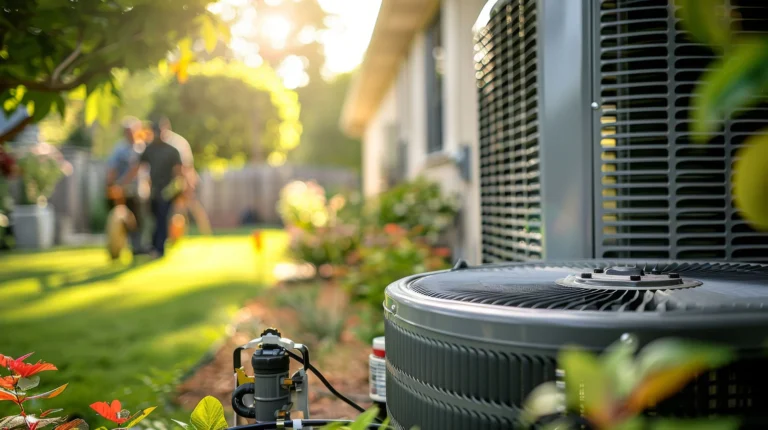
Consider planting low-growing shrubs and ground covers near your home’s foundation to help cool the air before it enters your house. Taller plants and trees should be positioned further away from your home to allow for adequate air circulation. Additionally, be mindful of any plants or trees that may be blocking your HVAC system’s outdoor unit. Obstructed airflow can cause your system to work harder, leading to increased energy consumption and potentially shortening its lifespan.
Xeriscaping for Water Conservation and Energy Savings
Xeriscaping, a landscaping method that focuses on water conservation, can also contribute to energy savings. By selecting native, drought-tolerant plants and utilizing efficient irrigation techniques, you can significantly reduce your outdoor water consumption. This not only saves water but also minimizes the energy required to pump and treat water for landscaping purposes.
Furthermore, xeriscaping often involves replacing water-intensive lawns with low-maintenance, drought-resistant groundcovers or hardscaping elements like rock gardens or permeable pavers. These alternatives can help reduce the urban heat island effect, where heat is absorbed and radiated by paved surfaces, making outdoor spaces and nearby buildings hotter. By minimizing this effect through xeriscaping, you can create a cooler microclimate around your home, reducing the demand on your air conditioning system.
Partnering with HVAC and Landscaping Professionals
To maximize the energy efficiency benefits of your HVAC system and landscaping, it’s essential to work with experienced professionals. At T. N. Bowes, we have built our outstanding reputation by using highly trained technicians, installing quality products, and delivering excellent service at a competitive price. Since 1988, customers have chosen us over other HVAC contractors in southern Maryland for our expertise and dedication to customer satisfaction.
When planning your landscaping for energy efficiency, consult with a knowledgeable landscape designer who understands the local climate and can recommend plants that will thrive in your area while providing the desired energy-saving benefits. Our team at T. N. Bowes can work closely with your landscaping professional to ensure that your HVAC system and landscaping are optimized for maximum efficiency and comfort.
Conclusion
The connection between your HVAC system and landscaping may not be immediately apparent, but it plays a significant role in your home’s overall energy efficiency. By strategically using plants for insulation, improving airflow, and adopting water-wise landscaping techniques, you can create a more comfortable living environment while reducing your energy costs. As a trusted HVAC service provider in Waldorf, MD, Saint Charles, MD, Lexington Park, MD, La Plata, MD, Leonardtown, MD, and California, MD, T. N. Bowes is committed to helping homeowners optimize their heating and cooling systems for maximum efficiency. Together with a skilled landscaping professional, we can help you unlock the hidden potential of your outdoor spaces to create a more energy-efficient and comfortable home.